01
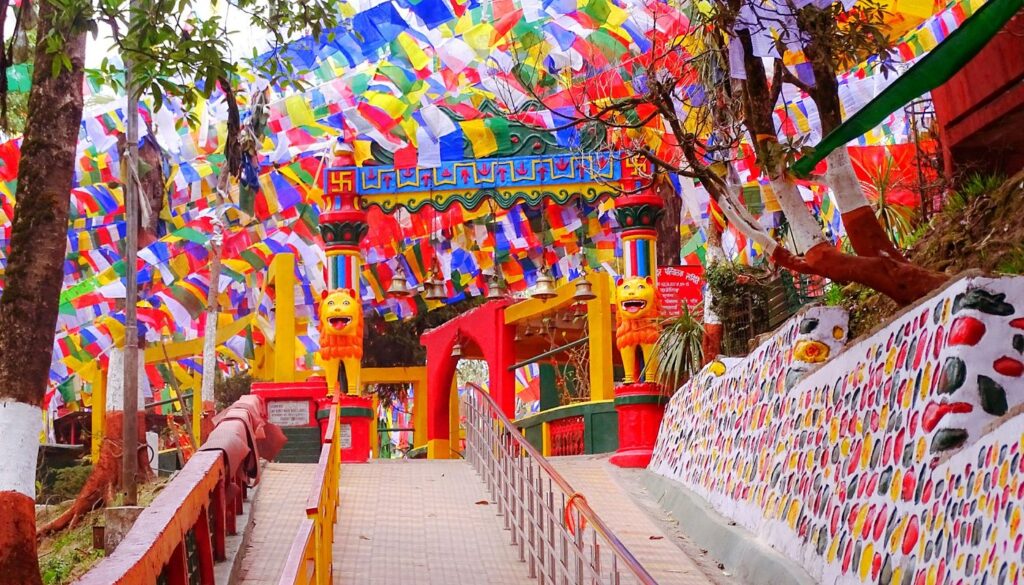
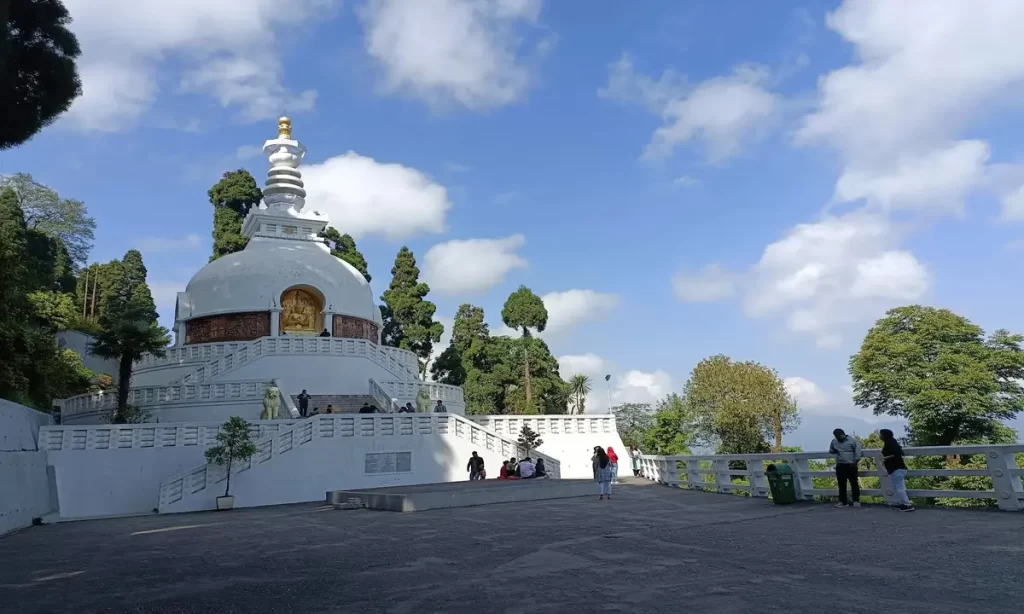
Darjeeling is home to the serene Peace Pagoda, one of the most tranquil and spiritually uplifting attractions in the hills. Located on Jalapahar Hill at an altitude of around 2,100 meters (about 6,900 ft), this beautiful white structure was built under the guidance of Japanese Buddhist monk Nichidatsu Fujii and is maintained by the Nipponzan Myohoji Buddhist Order. The Peace Pagoda symbolizes unity, harmony, and peace among all religions and communities.
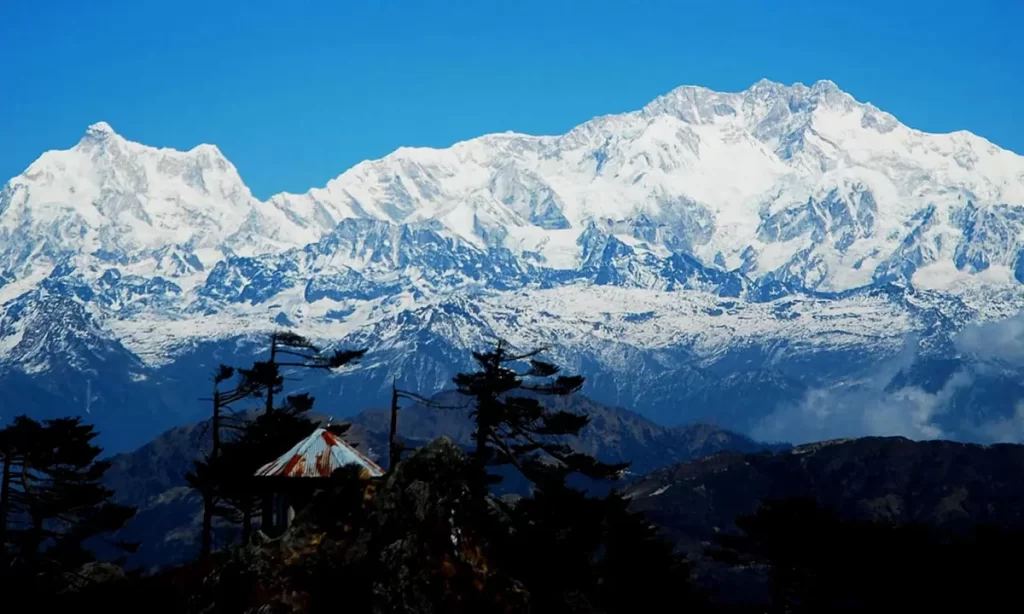
The pagoda’s pristine white dome stands against the backdrop of lush green hills and the majestic Kanchenjunga range. Four golden avatars of Lord Buddha are carved on the pagoda, each depicting different stages of his life — birth, enlightenment, preaching, and nirvana. The calm surroundings, fluttering prayer flags, and rhythmic chanting from the nearby temple create a deeply peaceful atmosphere.
Visitors can climb the steps surrounding the pagoda for panoramic views of Darjeeling town, tea gardens, and snow-capped Himalayan peaks on clear days. The nearby Japanese Temple adds to the spiritual charm, where monks perform prayers daily and welcome visitors to join the peaceful chanting sessions.
Reaching Peace Pagoda is a short drive of about 10–15 minutes from Darjeeling Mall Road. The route passes through scenic forest roads and quiet residential areas, making the journey itself refreshing. The best experience is during early morning or late afternoon when the weather is pleasant and the crowd is less.
Best Time: Morning (6:00 AM – 9:00 AM) or Late Afternoon (3:30 PM – 5:30 PM)
Entry Charge: No entry fee
Duration: 1–2 hours
Tips: Maintain silence inside the temple premises, remove shoes before entering prayer halls, and carry a light jacket as the area can be breezy.
Show less
02
Darjeeling is blessed with Tiger Hill which is considered one of the best places to watch the sun rising in the Himalayas. Situated at 11 kilometers (about 6.84 mi) from the main town and at an elevation of 2,590 meters (about 1.61 mi), this iconic viewpoint looks like a natural amphitheater conquered by the sun as the first rays of dawn dance on the top of the Himalayan peaks. Visitors on clear mornings can get a view of Mount Everest, Kanchenjunga, Lhotse, and Makalu – four of the world’s five highest peaks.
Reaching Tiger Hill is a journey that begins in the darkness before dawn, with shared taxis and jeeps navigating along tea estates and mountain roads. When the crowds gather at the viewing deck, the anticipation grows big for the golden sunlight to be the first to touch the mountain peaks all dressed up with snow in their new bright colors of orange and pink. It is particularly fascinating to watch this magic during winter months when the air is brisk, and the sight is clear.
Best Time:Sunrise before it gets very warm (Recommendation: 4:00 AM Departure)
Entry Charge: INR 10 per vehicle as parking.
Duration:2-3 hours, including travel
Tips:Wear warm clothes, order shared taxis in advance, and reach early to occupy the best viewing spots
03
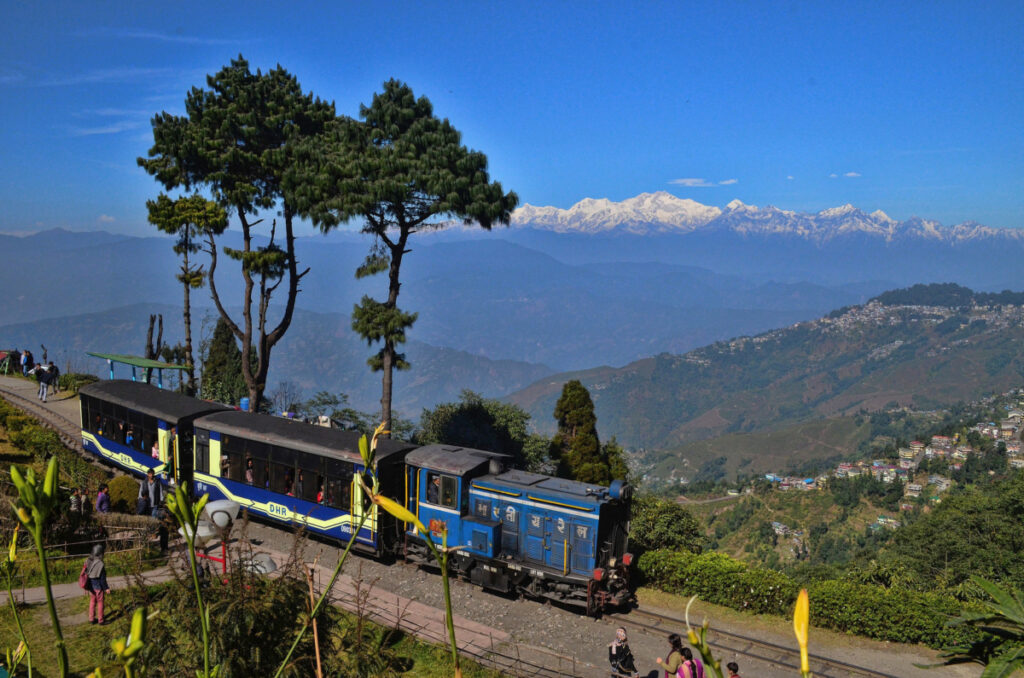
The DHR is a UNESCO World Heritage site, and the joy ride is one of the few Darjeeling attractions that actually earns the hype. The standard tourist trip runs from Darjeeling station to Ghum (also spelt Ghoom), the highest railway station in India, and back, with a photo halt at Batasia Loop and a 25-minute stop at the small railway museum in Ghum (museum entry is included in the ticket). The whole round trip covers about 14 km and takes roughly two hours.
The choice that matters is steam versus diesel. The steam engine is the one people remember, hissing and throwing coal smoke back through the open windows, and yes, you will smell of it for the rest of the morning. The diesel version gives you the same tea-garden and ridge views without the soot, which is the kinder option with young children. Costs in 2026 run roughly ₹1,300 to ₹1,500 for steam and ₹800 to ₹1,000 for diesel (to confirm, as fares revise). Rides start early, around 7:40 AM, with the last departure in the late afternoon. Book ahead through IRCTC or a reservation counter, because in summer and around Durga Puja these sell out days in advance.
04
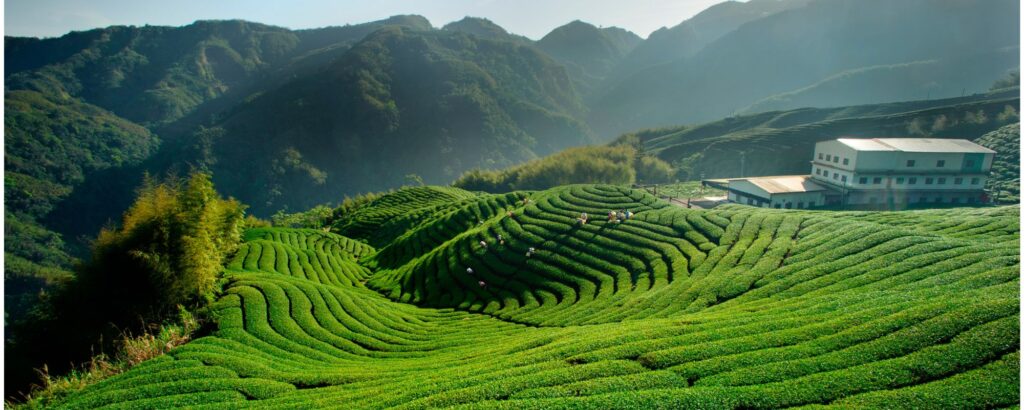
Darjeeling’s name travels the world on the back of its tea, and Happy Valley is the working garden closest to town, either a short ride or a calf-burning walk down the hillside below the Mall. A garden hand walks you through the shed while the leaf is withering on the troughs, then past the rolling and drying, and the room smells green and vegetal, nothing like the packet in your kitchen. Time it to the processing season, March to May for the delicate first flush and June onward for the stronger second flush; in winter the machinery sits idle. A guided tour with a tasting runs a few hundred rupees. One warning: skip the roadside stalls that wave free samples then push overpriced vacuum packs, and buy from the estate shop or from Nathmull’s on Laden La Road instead.
05
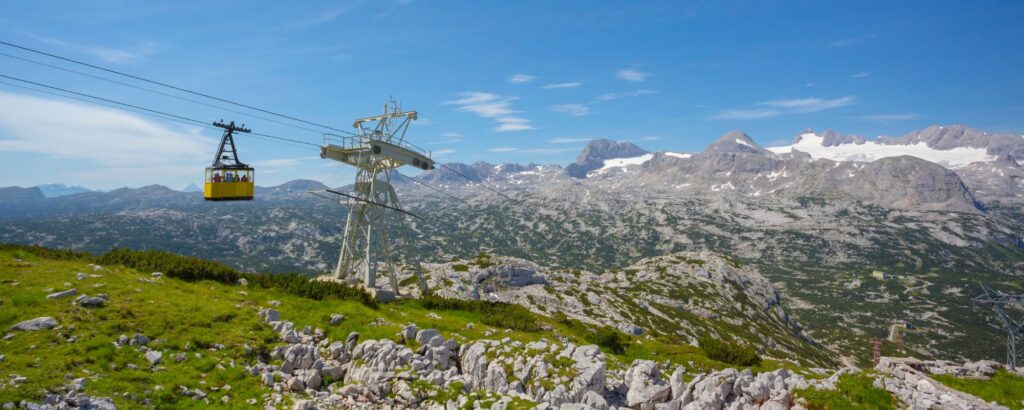
One of India’s oldest passenger ropeways (to confirm), a cable car that drops from Singamari down toward the Rangeet valley over a green fall of tea gardens and forest. The car sways just enough to make first-timers grip the bar, and on a clear day the valley opens up beneath your feet; in fog you are paying to hang inside a cloud, so check the sky before you queue. Timings are usually 10 AM to 4 PM, weather permitting, and tickets are bought at the Singamari counter with no advance booking. One thing most blogs miss: it shuts for maintenance on the 19th of each month, so do not plan it for that date.
06
A short climb above Chowrasta brings you to Observatory Hill, sacred to both Hindus and Buddhists, with prayer flags, bells, and the Mahakal temple at the top. Cheeky monkeys work the crowd here, so keep snacks and phones tucked away. Ten to twenty minutes, easy to combine with a Mall Road stroll, and the ridge views on a clear day are excellent.